

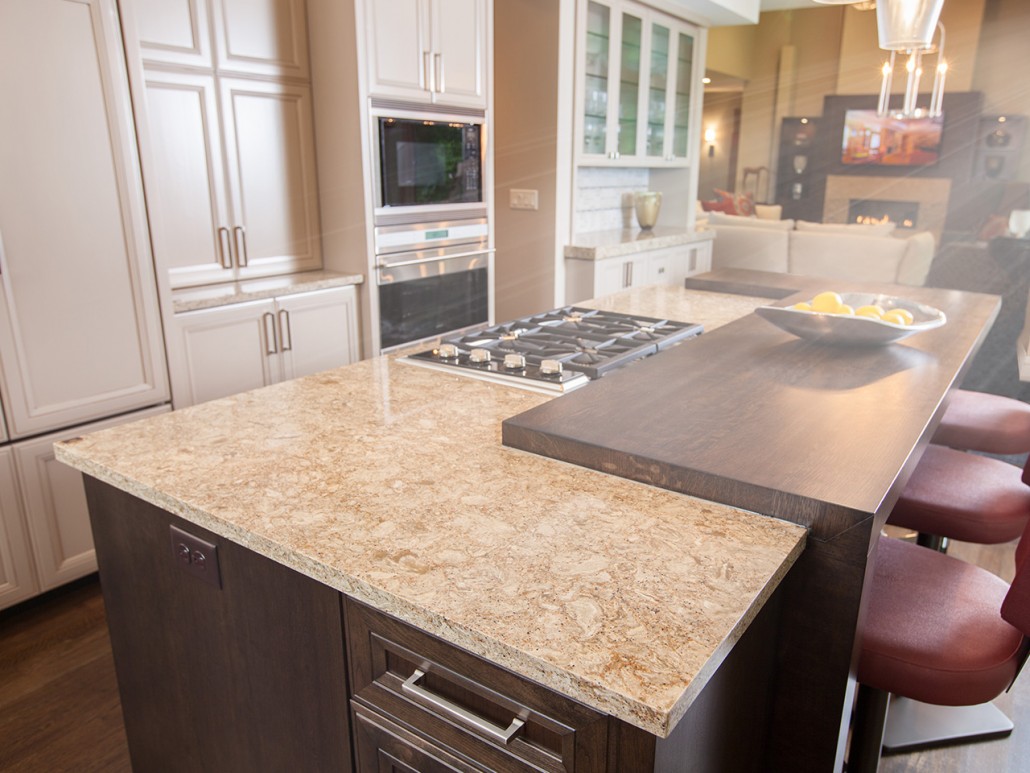
Ogallala's water is hard, and there's geology behind it. The city and the country around it draw from the High Plains Aquifer, the same Ogallala Aquifer that lends the region its name, and Nebraska groundwater routinely tests hard to very hard. The good news for anyone picking countertops here is that both quartz and granite live comfortably with hard water. Neither is ruled out. The choice between them turns on one property, porosity, and on a couple of easy habits. This guide lays out how hard the local water really is, what it does to a stone surface, and which of the two holds up with less fuss. When you want to compare slabs in person, our countertop selection carries both granite and quartz.
How Hard Is Ogallala's Water, Really?
Ogallala's water is hard because it comes from a mineral-rich aquifer, and the numbers back that up. Water hardness is measured in milligrams per liter of dissolved calcium and magnesium, and the U.S. Geological Survey sorts it into four bands: soft below 60, moderately hard from 61 to 120, hard from 121 to 180, and very hard above 180 milligrams per liter. University of Nebraska-Lincoln Extension, which publishes hard-water guidance because so much of the state deals with it, draws the very-hard line at that same 180 milligrams, about 10.5 grains per gallon on a water-softener readout, where one grain equals roughly 17 milligrams per liter.
Nebraska's groundwater regularly lands in the top two bands, which is why hard water is a fact of life from Ogallala to Lake McConaughy. The Ogallala Aquifer underlies the town and supplies the drinking water for the large majority of people across the High Plains region. Aquifer water picks up calcium and magnesium as it moves through limestone and other minerals underground, so it arrives at your tap carrying the very compounds that spot glassware, cloud a shower door, and leave a film on a countertop. Knowing your water is hard is the starting point for choosing a surface that shrugs it off.
What Hard Water Actually Does to a Countertop
Hard water leaves mineral deposits on a countertop, not permanent damage, and understanding the difference keeps the worry in proportion. When a droplet of hard water dries, the water evaporates and its dissolved calcium and magnesium stay behind as a chalky white spot or a faint ring. Over months, those deposits build up around faucets and along the back edge of a sink, and on a dark surface they can read as a dull, cloudy haze. This is limescale, the same buildup you scrub off a showerhead.
Where the surface matters is whether those minerals sit on top or work their way in. On a non-porous surface, the film has nowhere to go and lifts off with a wipe. On a porous one, repeated wetting and drying around the sink can let minerals settle into the surface over years if the stone is left unsealed and unwashed. So the best countertop for hard water is one that is non-porous, easy to wipe clean, and forgiving when you miss a spot after doing dishes. Both quartz and granite can meet that bar, with one difference between them.
Is Quartz or Granite Better for Hard Water?
Quartz has a slight edge over granite in hard water because it is non-porous by design. Engineered quartz is about 90 to 94 percent ground quartz bound with a polymer resin, and that resin fills the gaps between mineral grains so tightly that liquids cannot penetrate. Hard-water film lands on the surface and wipes away, and there is no sealing to keep up with, ever. For a busy kitchen where dishes pile up and a wet sponge sits by the sink, that lack of upkeep is the real advantage. Quartz earns its keep on durability too. It rates 7 on the 10-point Mohs mineral-hardness scale, harder than the 4 to 4.5 of ordinary steel, so a dropped knife will not scratch it.
Granite handles hard water well too, and the fear that it fails in it is overblown. Granite is natural stone and mildly porous, so it does benefit from wiping up standing water around the sink and, in some cases, a sealer. But a maintained granite top sheds hard-water film just like quartz does. The honest summary is that neither material will be ruined by Ogallala's water; quartz asks slightly less of you day to day, while granite gives you natural, one-of-a-kind stone that many people prefer to look at. Your habits at the sink matter more than the gap between the two.
Does Granite Need Sealing in Hard Water?
Most granite does not strictly need sealing, even in a hard-water kitchen, which surprises people who have heard the opposite for years. The Natural Stone Institute, the trade association that sets care standards for the U.S. stone industry, states plainly that most granite countertops do not need to be sealed, though many still benefit from a quality sealer that adds stain resistance. A sealer is an impregnator that makes stone more stain-resistant, not stain-proof, and its main job in a hard-water home is around the sink, where water sits most.
A simple test tells you whether your granite wants sealing. Drip a little water on the surface near the sink and wait a few minutes: if it beads up, the stone is fine, and if it soaks in and darkens, it is time to reseal. Most homeowners who wipe up after cooking find their granite rarely needs more than an occasional reseal on the sink run. That is far less maintenance than the hard-water horror stories suggest. It is the reason granite is still a comfortable choice here.
Does Quartz Ever Film or Stain in Hard Water?
Quartz can show a hard-water film, but it never stains from it, because nothing soaks into a non-porous surface. The calcium and magnesium that dry on quartz sit on top as a haze and lift off with a damp cloth or a mild cleaner. What quartz does not like is harsh chemistry: abrasive powders can dull its finish, and strongly acidic or alkaline cleaners, including some limescale removers, can damage the resin over time. So the trick with quartz in hard water is gentle and frequent rather than harsh and occasional.
Sunlight is the one other quartz caveat worth a mention, unrelated to hardness. Because the resin can yellow under years of direct ultraviolet light, quartz is happiest indoors and away from a sun-blasted window, which is rarely an issue for a kitchen counter. For hard water specifically, quartz is about as low-maintenance as a countertop gets: wipe the film, skip the acid, and it stays clear.
Cleaning Hard-Water Spots Off Quartz and Granite
The safest way to clean hard-water spots off either stone is a pH-neutral cleaner and a soft cloth, used often. Warm water with a drop of mild dish soap handles daily film on both quartz and granite. Gentle and often wins. For a stubborn mineral ring, a cleaner made for natural stone or engineered quartz does the job without risking the surface. The habits that prevent buildup in the first place are simple.
Wipe up standing water around the faucet and sink, where minerals collect fastest.
Skip vinegar, lemon, and other acids on both stones; they etch and, on quartz, attack the resin.
Skip abrasive powders and scouring pads that scratch a polished finish.
Dry the counter after washing dishes so droplets never get the chance to leave a ring.
On granite, run the water-drop test on the sink area a couple of times a year and reseal only if it soaks in.
Quartz vs Granite in Hard Water, Side by Side
Quartz wins on upkeep, granite wins on natural character, and both survive Ogallala's water. Here is the head-to-head on what hard water actually tests.
In a hard-water kitchen | Quartz | Granite |
|---|---|---|
Porosity | Non-porous; nothing soaks in | Mildly porous; benefits from care at the sink |
Sealing | Never needs it | Most granite does not need it; sealer optional |
Hard-water film | Sits on top; wipes off | Wipes off; keep the sink run maintained |
Staining risk | None from minerals; avoid harsh cleaners | Low when maintained; wipe standing water |
Daily upkeep | Lowest; wipe and go | Low; wipe the sink area, occasional reseal |
Look | Consistent, engineered pattern | One-of-a-kind natural stone |
Common Questions About Countertops and Hard Water
Is hard water bad for quartz countertops?
No, hard water is not bad for quartz. Because quartz is non-porous, minerals cannot soak in, so hard water leaves only a surface film that wipes off with a damp cloth. The one thing to avoid is harsh, acidic limescale removers, which can damage the resin. A mild, pH-neutral cleaner keeps quartz clear in even very hard water.
Does hard water damage granite?
Hard water does not damage granite, though it can leave a mineral film if standing water is left to dry, especially around the sink. Wiping up water and keeping the sink area sealed keeps granite looking clean. A maintained granite top handles Ogallala's hard water without trouble, contrary to the common worry that stone fails in it.
How do I remove hard-water buildup from my countertop?
Remove hard-water buildup with a pH-neutral stone or quartz cleaner and a soft cloth, working gently. For a stubborn ring, let the cleaner sit briefly, then wipe; never reach for vinegar, lemon, or abrasive powder, which etch stone and harm quartz resin. Drying the counter after dishes is the simplest way to stop buildup before it starts.
Do I need a water softener to protect my countertops?
No, you do not need a water softener just to protect countertops, since both quartz and granite tolerate hard water with routine wiping. A softener can reduce spotting on glassware and fixtures throughout the house, which some Ogallala homeowners value for other reasons. For the counters themselves, good daily habits do the job.
Which is easier to maintain in hard water, quartz or granite?
Quartz is slightly easier to maintain in hard water because it is non-porous and never needs sealing. Granite is close behind and only asks that you wipe standing water and run an occasional seal check at the sink. Both are far lower-maintenance than the hard-water reputation suggests, so the decision often comes down to whether you prefer an engineered or a natural look.
Choosing Countertops for a Hard-Water Kitchen in Ogallala
The right countertop for Ogallala's hard water is the one whose upkeep matches your routine, because both quartz and granite will hold up. If you want the lowest maintenance and no sealing, quartz wipes clean and asks nothing more. If you love natural stone and do not mind wiping the sink area and an occasional seal check, granite rewards you with a surface no two of which are alike. Either way, the water here is not a reason to compromise on the kitchen you want. If you are also weighing a budget option, our full quartz, granite, and laminate comparison puts all three side by side.
Seeing the two materials next to each other, under real light, settles the choice faster than any spec sheet. Bring your cabinet colors and a rough measurement to our showroom in North Platte or Grand Island, and our designers will walk you through granite and quartz for a hard-water kitchen and your budget. When you are ready to price it out, request a free in-home estimate and we will measure the space and lay out the options that fit your home.


