

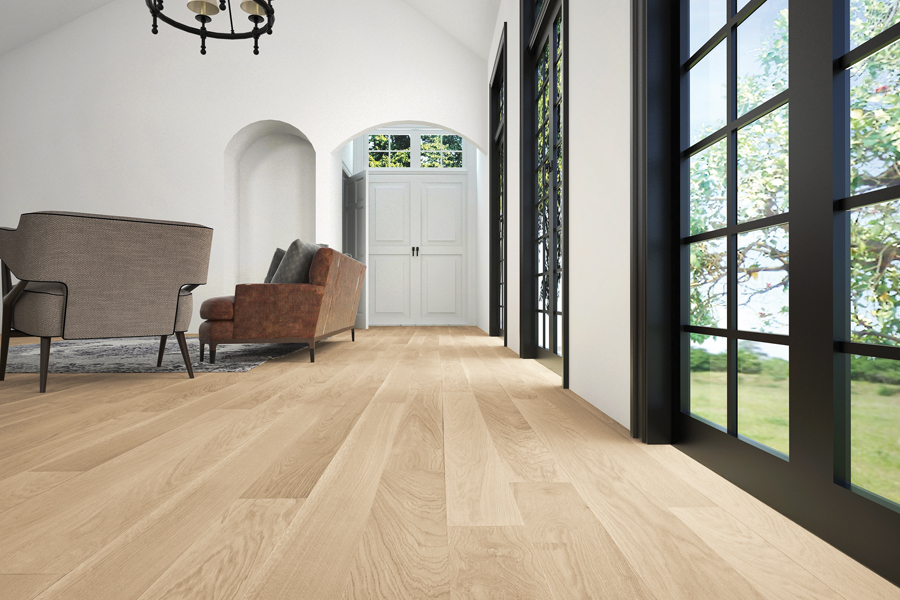
When the furnace kicks on in November and doesn’t really quit until March, your house feels it—especially your floors. Many homeowners around Kearney fall in love with the look of real wood, only to notice gaps between boards, squeaks, and cupping after that first brutal winter. The culprit usually isn’t the product quality; it’s the way solid wood reacts to Central Nebraska’s dry indoor air.
Understanding how engineered and solid hardwood behave in this climate will help you choose a floor that still looks great after years of freeze–thaw cycles.
How Nebraska’s Climate Affects Hardwood
Central Nebraska swings from humid summer days to bone-dry winter air. When your furnace runs constantly, indoor humidity can easily drop below 30%. Solid hardwood responds by shrinking across the width of each board, which is why you see seasonal gaps, cracks, and more noise underfoot.
Engineered hardwood is still real wood on top, but it’s built over cross‑layered plywood or similar cores that resist movement. That layered construction makes it far more stable when humidity jumps up and down, which is a big reason many families around Kearney and Grand Island choose it for busy main floors.
If you’d like to see how many styles fall into each category, you can browse more than 800 options in our solid and engineered hardwood catalog and compare constructions side by side.
Engineered Hardwood: Built for Movement and Modern Homes
Engineered hardwood shines in homes that see big temperature swings, open floor plans, and plenty of foot traffic. The wear layer on top is genuine wood, so you still get the character and grain that make hardwood so appealing, but the core is designed to stay flatter and tighter through winter.
Because of that stability, engineered planks often work better over wider areas, on upper stories, and in rooms with large windows where the sun can bake one section of the floor while the rest stays cooler. You’ll also find more options rated for installation over concrete, which matters in split-levels and newer construction around North Platte.
Design-wise, the variety is huge—wide planks, matte finishes, rustic textures, and traditional stains. Our team can walk you through different engineered hardwood lines from Bruce, Hallmark, and other brands so you can zero in on a style that fits both your home and the way you live.
When you’re investing in a long‑term floor, how it’s installed matters just as much as what you choose. Our licensed crews handle professional hardwood installation for Central Nebraska homes, making sure expansion gaps, subfloors, and transitions are done right so the floor can move the way it was designed to.
When Solid Hardwood Still Makes Sense
Solid hardwood is a classic for a reason. It can be sanded and refinished multiple times, which is appealing if you’re restoring an older home or planning to stay put for decades. In the right conditions, it delivers incredible warmth and authenticity.
The key is controlling moisture and expectations. Solid boards do best in areas where humidity can be kept more consistent—often first floors over wood subfloors rather than basements. A good whole‑house humidifier, sensible board widths, and species selection all help reduce seasonal gapping, but they won’t eliminate movement entirely.
If you’re planning a larger remodel that includes new cabinets or counters, tying your species and stain to those elements makes the space feel intentional. Many homeowners look at coordinated countertop materials from Cambria and Silestone at the same time they’re choosing hardwood so the kitchen or great room reads as one connected design.
To see how these choices come together in real projects, you can scroll through our photo gallery of completed Central Nebraska remodels and look for spaces that resemble your own home.
Choosing the Right Hardwood for Your Home
So which is better for our dry winters—engineered or solid? The honest answer is: it depends on the room, the home, and your priorities.
- If you want the most stable option for large, open areas with lots of seasonal movement, engineered is usually the smarter bet.
- If you’re restoring an older house and love the idea of future refinishing, solid may still be worth considering—with good humidity control and realistic expectations.
Because we’re a full‑service interiors shop, we can also help you coordinate hardwood with other finishes, from kitchen and bath cabinetry solutions to the shades or blinds that will soften the afternoon sun coming through your windows.
If you’re weighing options for your own home, we’re happy to come out, measure, and talk through the pros and cons based on your specific rooms. You can book a free measurement and in‑home hardwood consultation, and we’ll help you choose a floor that can handle many more Kearney winters.


